Blueberry Muffin Bread
In honor of National Cooking Day (September 25th), Mary Ann from the Delmar office submitted this quick bread recipe that… [...]

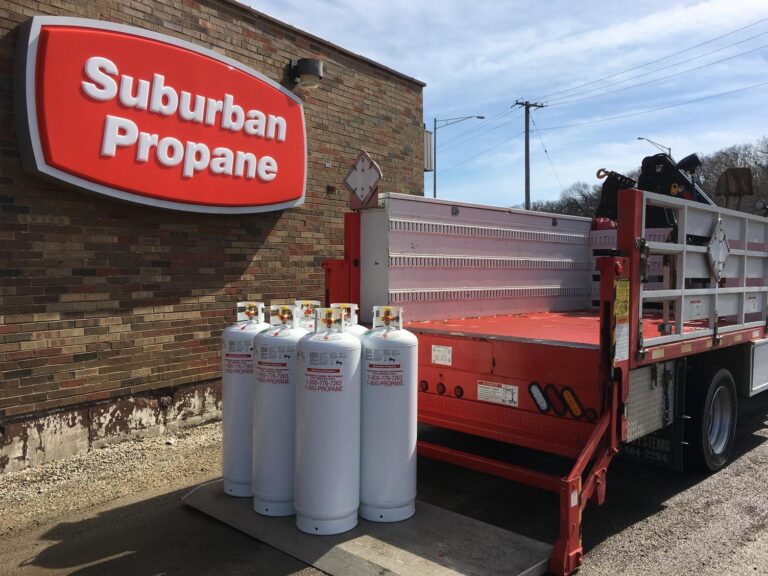
Whether you’re heating your home or powering equipment, choosing the right propane tank size is key to keeping your energy supply efficient and cost-effective. Using the right tank helps ensure you have enough fuel for your needs, without overspending on capacity you don’t use.
At Suburban Propane, we deliver and service a variety of tanks, designed to fit everything from residential properties to large-scale commercial operations. In this guide, we’ll share everything you need to know to choose the right propane tank for your needs.
Tank size ultimately depends on how you use propane, how often you need refills, and the total energy demand of your home or business.
Small propane cylinders, such as those used for grills and patio heaters, are typically measured in pounds since they’re portable and designed for lighter use. Larger stationary tanks are measured in gallons, since they store propane for long-term energy needs.
Choosing the correct tank size helps ensure you have an uninterrupted fuel supply and reduces delivery frequency, which saves you both time and money. Here are some of the things to consider when deciding which propane tank size is best for you.
The more propane you use daily, the larger your tank should be. A family using propane for routine heating, water, and cooking will consume fuel faster than someone who uses it less frequently for seasonal grilling or fireplaces.
Your propane demand also depends on the devices you’re powering. For example, a household using propane for heating, water, cooking, and clothes drying will likely need a tank that’s 250 gallons or larger. However, a household only using propane for a pool heater and grill may only need 120 gallons.
Larger homes inevitably require a large fuel supply, while smaller homes or vacation cabins may only need enough to support limited seasonal or weekend use. Knowing the square footage of your home is a key factor when deciding what size tank to get.
Smaller tanks need refills more frequently, which can quickly lead to higher long-term delivery costs. If propane is your primary energy source, investing in a larger tank may be more cost-effective in the long run.
Your local climate also impacts how much propane you use. Homes in colder regions will naturally consume more propane during winter months, while those in milder climates may only need seasonal refills.
The size of the propane tank you choose also depends on whether you’re heating a residential or commercial property.
Residential propane systems are typically smaller and designed to support home heating, water heating, cooking appliances, and backup generators. Commercial operations often require larger propane tanks (typically 500 gallons or more), to power higher-BTU equipment such as boilers, high-capacity water heaters, commercial heating systems, and kitchen equipment including ranges, ovens, fryers, and griddles, ensuring reliable performance for demanding applications.
Businesses greatly benefit from larger propane storage, since it minimizes delivery interruptions and better supports high-demand usage.
Propane tanks come in a wide range of sizes. Whether you’re grilling on the weekends or heating a full-scale business, there’s a tank designed to meet your energy needs.
When choosing a tank, it’s important to note that propane tanks are never completely full. Tanks are typically filled to about 80 percent capacity to leave room for their contents to expand and contract safely as temperatures change. If you’re considering installing propane for your home or business, here’s a quick overview of their sizes and the applications they’re best suited for.
20-pound and 100-pound propane tanks are some of the smallest tanks you can get. 20-pound tanks are typically 1.5 feet tall and one foot in diameter, while 100-pound tanks are around four feet tall and 1.5 feet in diameter.
20-pound tanks can hold about 4.6 gallons of propane and are commonly used for grills, patio heaters, and small portable appliances. 100-pound tanks can hold around 23-25 gallons and are typically used for fireplaces, stoves, dryers, or temporary heating in small homes.
These portable tanks are available at many retail locations and can be refilled or exchanged.
120-gallon tanks are approximately four feet tall and two feet in diameter and hold around 96 gallons of propane. They’re traditionally used in homes needing propane to fuel one or two appliances, such as water heaters or stoves. They’re also found in small offices or vacation homes that only need limited seasonal energy.
A 120-gallon tank is ideal for those needing more storage capacity without taking up much space on your property.
250-gallon propane tanks are about 7.5 feet long and 2.5 feet in diameter and hold around 200 gallons of propane. They’re primarily found in homes that use propane for heating, cooking, and water heating, and are a solid option for households with moderate energy usage.
This tank size is an ideal balance between storage capacity and footprint for average-sized homes.
500-gallon propane tanks are around 9.5 feet long and three feet in diameter and hold around 400 gallons of propane. They’re ideal for larger homes that use propane for whole-home heating and multiple appliances, but they can also be found in small businesses, farms, and commercial properties.
Having a tank as large as 500 gallons reduces refill frequency and helps ensure you have enough propane to power your systems through the winter.
1000-gallon propane tanks are around 16 feet long and four feet in diameter and hold around 800 gallons of propane. They’re designed for large homes, estates, commercial properties, and agricultural operations.
1000-gallon and larger tanks are built for heavy-duty usage by businesses using propane for equipment and industrial processes, helping support an uninterrupted energy supply even during high-demand seasons.
Propane tanks can be installed above ground or underground, depending on your property layout and preferences. Here are some of the pros and cons of each storage type.
Above-ground tanks are the most common installation type. These propane tanks are easy to access for maintenance, refilling, and safety inspections.
Advantages of above-ground tanks include:
For many homeowners, above-ground tanks are a practical solution that offers convenience and safety.
Underground tanks are ideal for customers who want a cleaner visual appearance or want to preserve their landscaping. Though they’re more expensive to install due to excavation costs, they offer several benefits that above-ground tanks don’t.
Advantages of underground tanks include:
These tanks are coated for long-term durability and are designed to be just as safe and efficient as above-ground models when properly installed.
No, propane tanks are not completely full when you receive them. Propane tanks are filled to about 80% capacity to allow for safe expansion of gas as temperatures change, ensuring optimal performance.
How long your propane tank lasts before needing a refill depends on your tank size and usage. A household using propane for heating, cooking, and water may go several weeks or months between refills. Suburban Propane can help estimate your usage and set up an automatic delivery schedule for convenience.
You can usually check your propane tank level by checking the gauge under the lid. If your tank does not have an existing gauge, Suburban Propane may be able to install a gauge or digital monitor to track levels. For added convenience, Suburban Propane offers remote tank monitoring services, so you can monitor your tank from anywhere.
No. Propane tanks must always remain upright. Propane appliances are designed to operate on vapor, not liquid, and proper tank positioning allows liquid propane to safely convert to vapor. Placing a tank on its side can allow liquid propane to enter the service line, potentially causing equipment damage, unsafe operation, or leaks. Proper upright tank positioning is essential for safe, reliable performance.
Yes, most propane providers include standard service fees to ensure your system operates safely and efficiently. Fees may cover periodic safety checks, tank maintenance, or delivery costs, depending on your service agreement. You can review Suburban Propane’s standard service fees, safety fees, and delivery options here.
Propane prices vary based on tank size, location, and overall fuel usage. Market conditions and seasonal demand can also affect pricing. Call Suburban Propane to get a more accurate estimate for your specific needs.
No matter the size of your home or business, Suburban Propane can help you find the perfect tank for your needs. With expert installation and safety-first service, you’ll always have a trusted energy partner by your side. Contact us today to speak with a professional and find the right tank size for your property.
Share this story, choose your platform:



CATEGORIES

Available 24/7/365
COMMUNITY
Locations providing exceptional service to local communities across 42 states
EXPERIENCE
Years serving our customers and their communities. Customer satisfaction since 1928
CUSTOMER SERVICE
Dedicated employees ready to assist you with quality service for all your fuel needs
RELIABILITY
We are here for you with customer service representatives standing by to take your call
Please call us 24/7/365 at 1-800-PROPANE
