Supporting Those Working on the Front Lines in These Uncertain Times
Our St. Albans VT location generously donated 300 gallons of propane to heat the meal tents for the Essex Westford… [...]

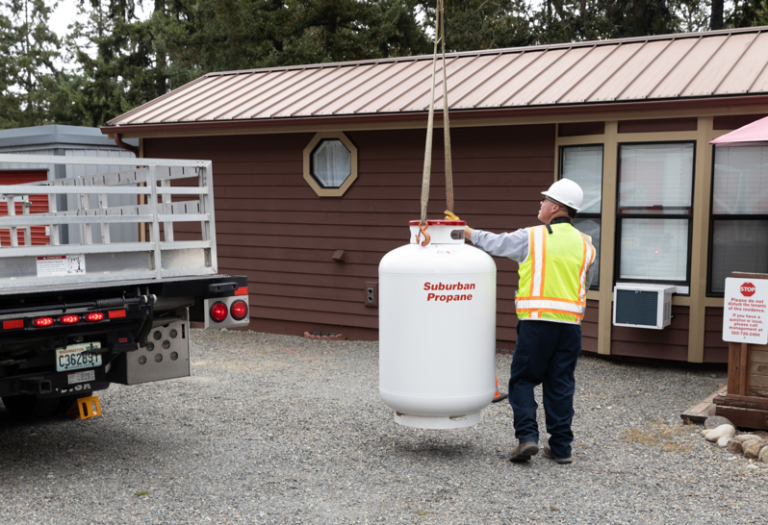
Propane tanks are designed for long-term use, but like any equipment, they require regular inspections and maintenance. Whether you use a small grill cylinder or a larger residential tank, understanding the lifespan of your propane tank can help support safe and reliable operation.
In this guide, we’ll explain the factors that impact how long a propane tank lasts, such as tank size, weather exposure, and maintenance history.
Unlike some fuels, propane itself doesn’t go bad or degrade over time when stored properly in an approved tank.
Its long shelf life is one reason propane is commonly used for backup energy systems, seasonal equipment, and emergency preparedness applications.
Though propane itself remains stable, the tank that stores it eventually requires inspection, requalification, or replacement, depending on its type and how it’s used.
Portable propane cylinders are commonly used for grills, patio heaters, and outdoor appliances. These cylinders typically require requalification 10-12 years after the manufacture date, depending on the tank type and applicable regulations.
After initial qualification periods, many cylinders can continue to be used if they pass inspection and requalification requirements.*
Residential propane tanks are designed for long-term service and often remain in use for several decades when properly maintained. Above-ground and underground tanks may have different maintenance considerations depending on installation conditions and environmental exposure.
Routine inspections and professional service support safe operation throughout the tank’s lifespan.
Propane tank requalification is the process of inspecting a tank to confirm it continues to meet applicable safety and operational standards. This process is carried out by licensed professionals and propane suppliers and may include visual inspections, pressure testing, or valve evaluations, depending on the tank type or condition.
Portable cylinders require requalification after their initial certification period expires. Residential tanks are typically managed differently and are inspected as part of ongoing service and maintenance programs.
Even if a tank hasn’t reached its requalification date, there are some potential warning signs that suggest it should be inspected by a qualified professional.
These include:
If you notice any of these, contact a propane professional before continuing to use the tank.
If your propane tank has passed its certification or requalification date, your next steps depend on the type of tank you have.
Small, portable cylinders that have reached expiration will need requalification before they can legally be refilled. In some cases, replacement is the more practical option, depending on the age and condition of the tank. A qualified propane provider can help determine whether the cylinder can continue to be used safely.
Residential propane tanks are generally inspected and maintained differently than portable cylinders. If there are questions about the condition or certification status of your residential tank, a propane professional can evaluate it and recommend appropriate next steps.
Tank management can work differently for business customers depending on tank size, usage, and service structure. Contact Suburban Propane to discuss commercial propane tank support and maintenance options.
Managing propane tanks is more than simply refilling fuel. Proper inspections, maintenance, monitoring, and service all play a role in their long-term performance.
Suburban Propane can help homeowners understand tank requirements, schedule service, and explore delivery and monitoring options designed to ensure reliable propane supply throughout the year.
Contact Suburban Propane today to learn more about our propane tank services and support options available in your area.
What does the date stamped on my propane tank mean?
The stamped date on your propane tank typically indicates when the tank was manufactured or last requalified. This information helps determine when inspections or requalification may be required.
Can I get my propane tank refilled after the expiration date?
No, you typically cannot get your propane tank refilled after the expiration date. Portable propane cylinders require requalification according to applicable standards to be refilled after the expiration date.
How long does a home propane tank last?
Residential propane tanks often remain in service for several decades when regularly inspected and maintained. Contact your propane provider for more information on tank maintenance.
Do propane tanks expire if they’re never used?
Yes, propane tanks can still expire even if never used. Certification and requalification timelines are based on the tank itself, rather than how frequently it’s used. Even unused tanks eventually require inspection or requalification.
What do I do with an old propane tank I no longer need?
Old propane tanks must be handled and disposed of according to local regulations and safety requirements. A propane professional or approved disposal facility can help determine the appropriate next steps for you.
*This article is for general informational purposes only and is not a substitute for professional inspection or service. Contact your local Suburban Propane office for guidance specific to your tank and installation
Share this story, choose your platform:



CATEGORIES

Available 24/7/365
COMMUNITY
Locations providing exceptional service to local communities across 42 states
EXPERIENCE
Years serving our customers and their communities. Customer satisfaction since 1928
CUSTOMER SERVICE
Dedicated employees ready to assist you with quality service for all your fuel needs
RELIABILITY
We are here for you with customer service representatives standing by to take your call
Please call us 24/7/365 at 1-800-PROPANE
